CarGurus: Used & New Cars
- 4.8
- Rating
- 10.00M
- Installs
- Free
- Price

 Analysis by App-foxy
Buying a car from a phone sounds simple until you are comparing different sellers, checking finance options, trying to understand a vehicle’s history, and deciding whether a promising listing is actually worth your time. I found CarGurus: Used & New Cars most useful as a research companion rather than a complete replacement for a test drive or a conversation with a seller. It brings shopping, financing, and selling into one Auto & Vehicles app, but the quality of the experience depends heavily on your connection and on how carefully you interpret the information on each listing.
What I like immediately is the practical focus. This is not an app built around browsing cars as a hobby; it is designed for people who are trying to narrow down a real purchase. CarGurus, Inc developed it as a free app, with an Everyone content rating, so it is approachable for a wide audience. The app has been available since February 11, 2014, and its current version is 5.18. That long presence helps explain why it feels aimed at an established car-shopping routine rather than a novelty browsing experience.
How the connection changes the car-shopping experience
I find the connection most useful when it turns separate chores into one considered plan: narrowing down cars, thinking through financing, and deciding what to do with the vehicle I already own. The key is to treat each step as a handoff, not an automatic endorsement—the shortlist leads to questions for a seller, and those answers lead to an inspection. That makes the next part of the workflow easier to judge.
You May Also Like

 Blood Strike: 2.5 Anniversary
Blood Strike’s Loadouts Turn Every Drop Into a Tactical Gamble
A close look at Blood Strike’s custom loadouts: how fast access to signature weapons reshapes its battle royale rhythm, rewards preparation, and narrows the gap between fights.

 Pandora - Music & Podcasts
Pandora’s Music Is Easy to Start, but Harder to Recover
Pandora’s strength is its low-effort path from a seed to a station. Its weak spot is how much confidence it asks you to place in connection, setup, and quiet recovery.

 8 Ball Pool
 Is Built on Rivalries, Rematches, and Routine
A close look at the rivalries, rematches, shared routines, and unanswered safety questions that turn a quick pool match into a persistent mobile community.

 Samsung Music
’s Quiet Strength Is Playing What You Already Own
Its reach comes less from spectacle than from dependable access to a personal library. That simplicity is both the app’s strongest retention engine and its ceiling.

 AccuWeather: Weather Radar
AccuWeather Review: A Quick, Clear Forecast for Everyday Decisions
For everyday plans, the best forecast is the one you can understand quickly. AccuWeather makes rain timing, radar, and local conditions easy to act on, with a few trade-offs.

 Hill Climb Racing
Why Hill Climb Racing Still Turns Crashes Into One More Run
A tiny car, a bumpy hill and one more upgrade: Hill Climb Racing keeps resurfacing because its simple chaos makes every near-miss feel personal.
More From Our News Desk



Useful when the network is strong
The app makes the most sense when I have a reliable mobile connection or Wi-Fi and enough time to compare several vehicles. Car shopping is naturally data-heavy: listings need to load, photos need to appear, and changes to availability or seller information can affect whether a vehicle is still worth considering. A weak signal turns what should be a quick comparison into a sequence of waiting screens and partially loaded details.
That matters because the app encourages a research process rather than a single decision. I can begin with a broad idea, inspect several cars, remove the ones that do not fit my needs, and return to the remaining candidates. The value is in the comparison. If I only open one listing and make a decision immediately, I am using much less of what the app is good at.
I would not treat a listing as a permanent snapshot. A car can attract attention quickly, and online information can change while I am still thinking about it. For that reason, I make a note of the details that matter before leaving the listing, especially the seller, vehicle condition information, and any finance-related figures shown during the process. This is a small habit, but it prevents a later return from becoming confusing if the listing has changed.
Why the phone format is genuinely convenient
The mobile format works best in the small gaps of an ordinary day. I can review vehicles while waiting for an appointment, compare options during a lunch break, or show a shortlist to someone who will share the purchase decision. A desktop browser may be more comfortable for a long research session, but the phone is better for keeping the search moving when I am away from home.
A realistic example is someone whose current car has become unreliable. Instead of visiting several dealerships without a plan, I can use the app to establish a reasonable shortlist first. During a break, I compare the vehicles that seem suitable. Later, I return to the strongest candidates and decide which sellers deserve a call or visit. The app does not eliminate the offline part of buying a car, but it can make that part more focused.
There is also a useful social advantage. A car purchase often involves another person who is not standing beside me while I search. Showing a listing on a phone makes it easier to discuss practical questions such as whether the size is suitable, whether the mileage seems sensible for the budget, or whether a particular vehicle deserves an in-person inspection. I still prefer making the final decision after seeing the car, but the app helps turn vague preferences into specific candidates.
Where mobile browsing becomes awkward
The same screen that makes quick research convenient can make detailed comparison tiring. Photos, specifications, seller details, and finance information all compete for attention. When I am checking several vehicles in succession, it is easy to lose track of why I rejected one listing or what made another stand out. I get better results when I keep a short written shortlist outside the app rather than trusting my memory.
This is especially important for buyers with very specific requirements. If I need a particular body style, equipment combination, seating arrangement, or budget boundary, casual scrolling can create false confidence. A visually attractive car may not be the right one once I check the details carefully. I use the app to reduce the market to realistic possibilities, then verify the points that affect ownership before contacting a seller.
My best mobile tip is to separate discovery from decision-making. The first pass should be fast and broad. The second pass should be slower, with attention to the details that could create an expensive surprise. Treating every appealing photo as a final recommendation is the easiest way to turn a useful shopping tool into a source of impulse decisions.
Using the app to think about financing
The finance side is helpful for users who are still working out how a car fits into their budget. Having shopping and finance in the same app reduces the need to jump between unrelated tools while I am comparing vehicles. It encourages me to consider the purchase as a complete commitment rather than focusing only on the advertised vehicle.
Still, I would not use a finance figure as the entire definition of affordability. A monthly amount can look manageable while other ownership costs remain outside the immediate comparison. Insurance, fuel, maintenance, registration, and unexpected repairs all matter. The app can support the financing part of the decision, but it should not replace a personal budget that includes the rest of the car’s life.
This is one area where a traditional lender or a separate budgeting tool may be better for some people. If I already have a pre-approved loan, a trusted financial adviser, or a carefully prepared ownership budget, I may use the app mainly for vehicle discovery. If I am uncertain about borrowing, I take the finance information as a starting point for questions, not as a reason to commit immediately.
Selling through the same general workflow
The option to sell makes the app more useful when I am replacing a vehicle rather than simply adding one. It lets me think about the outgoing car and the possible replacement in the same shopping session. That can make the transition feel more organized, particularly when I need to understand how much money may be available for the next purchase.
There is a trade-off, though. Selling a car is not only about presenting it in an app. The description, photographs, condition, documents, and communication with interested people all affect the result. I would prepare those details before starting, because a rushed listing can create unnecessary questions and weaken confidence. The app can be part of the selling process, but it cannot make an inaccurately described or poorly presented vehicle more trustworthy.
What happens when connectivity fails
The most frustrating moments appear when the connection drops at the wrong time. A listing may open incompletely, images may take too long to load, or I may need to repeat an action after moving between Wi-Fi and mobile data. Car shopping is not an activity where partial information is always harmless; a missing detail can change whether a vehicle belongs on the shortlist.
My recovery approach is simple. I stop making decisions until the relevant listing has loaded properly, then retry the action once the connection is stable. If I am in a building, underground parking area, or rural location, I avoid assuming that a blank section means the vehicle lacks a feature or that a page has not changed. It may simply be a connectivity problem.
I also take notes before leaving a strong candidate. I record the vehicle’s identifying details and the questions I want to ask the seller, without assuming that the app will preserve every part of my browsing context exactly as I left it. This is not glamorous advice, but it is valuable when the search is spread across several days or locations.
Users who expect a fully dependable experience in poor-signal areas should adjust their expectations. This app is built around current online marketplace information, so it is naturally more useful with an active connection. If I am travelling specifically to inspect a car, I prepare beforehand and keep the seller’s contact details and my questions available outside the browsing session.
Being careful with data while searching
Because the app is used for browsing vehicles, finance, and selling, I pay attention to how much I do in one session. I avoid repeatedly opening every photo for every listing when I am only at the discovery stage. A faster first pass through text and basic details is more efficient, and I reserve deeper browsing for the few cars that survive the initial filter.
That approach is useful on a limited mobile plan and also saves battery. Car images and repeated page loading can consume more data than a quick shortlist review. When I have Wi-Fi, I prefer doing the detailed comparison there, especially if I know I will inspect many vehicles. On mobile data, I keep the session focused instead of endlessly scrolling through cars that clearly do not meet my requirements.
I also avoid entering personal information impulsively just because a listing catches my eye. When I reach the point of contacting a seller or exploring finance, I first make sure I understand why that vehicle is a serious candidate. This reduces unnecessary inquiries and keeps the shopping process more deliberate. The app is most useful when my searches are specific enough to guide me, rather than when I use it as an endless stream of attractive possibilities.
How it compares with familiar alternatives
The usual alternative is visiting dealerships or browsing several general classified marketplaces. Dealership visits provide something a phone cannot: immediate physical inspection, a direct conversation, and the chance to notice condition details that photographs do not communicate well. However, visiting without a shortlist can take much longer and may expose me to vehicles that do not match my priorities.
General classified services can offer a wider mix of listings and more informal seller interactions. That may be better for someone who enjoys negotiating directly or who is searching for an unusual vehicle. The trade-off is that the experience can feel less centered on the complete buying decision. CarGurus is more appealing to me when I want shopping, financing, and selling considered together rather than treating each task as a separate project.
A manufacturer-specific app may be preferable when I already know the exact brand and want official inventory or brand-focused information. A dedicated finance service may be stronger when the loan is the main concern. CarGurus sits between those choices: it is a broad car-shopping tool that helps me explore the market, but it is not a substitute for every specialist service involved in ownership.
The important distinction is that the app improves preparation more than it improves physical verification. It can help me arrive at a dealership or seller conversation with clearer questions, but I still need to inspect the car, confirm the paperwork, and judge whether the seller’s description matches reality. Buyers who want a completely remote purchase journey may find that limitation significant.
Who will get the most from it
I recommend it most to people who are early or midway through a vehicle search. It is useful when I know roughly what I need but have not yet decided which model, seller, or financing route makes sense. The combined shopping and selling angle is particularly practical for someone replacing an existing car.
It is also a good fit for organized comparison shoppers. If I am willing to create a shortlist, revisit promising listings, and write down questions, the app becomes much more valuable than it would be as a casual browsing tool. The strong user response is reflected in its 4.8 average from around 207 thousand ratings, while its reach of over 5 million installs suggests that it has become a familiar option for many mobile car shoppers.
I would be less enthusiastic for someone who already knows the exact vehicle they want from a single trusted seller. In that case, the app’s broader discovery process may add little. It is also not my first choice for a buyer who has unreliable connectivity and cannot prepare information before travelling. Finally, anyone who dislikes comparing options or who expects the app to verify every aspect of a used car should use it only as an initial research layer.
My verdict on a connected car-buying workflow
After using CarGurus: Used & New Cars as a research tool, I see its main strength in connecting several stages of the decision: finding vehicles, thinking about financing, and considering a sale. The phone format makes it easy to keep the search active throughout the day, while the broad marketplace approach is more efficient than visiting sellers at random.
Its main weakness is equally clear: the experience relies on timely online information and a stable connection. Poor reception can interrupt browsing, and a small screen can make serious comparison harder than it first appears. I also have to remember that a listing is an invitation to investigate, not proof that the vehicle is right for me.
My practical routine would be to browse on a dependable connection, narrow the search in two passes, save or note the strongest candidates, and verify important details directly before travelling. I would use the finance area to frame questions and the selling option to organize a replacement, while keeping the wider ownership budget separate. That workflow gives the app a clear role without asking it to do more than it can.
For a free Auto & Vehicles app from CarGurus, Inc, it offers a convincing balance of convenience and breadth. The current version, 5.18, supports a mature product that is easy to try without a financial commitment. If you want a connected starting point for comparing cars rather than a magic shortcut to the perfect purchase, this is an app I would recommend keeping on your phone.
FAQs for CarGurus: Used & New Cars
01What features does the CarGurus app offer to enhance the car-buying experience?
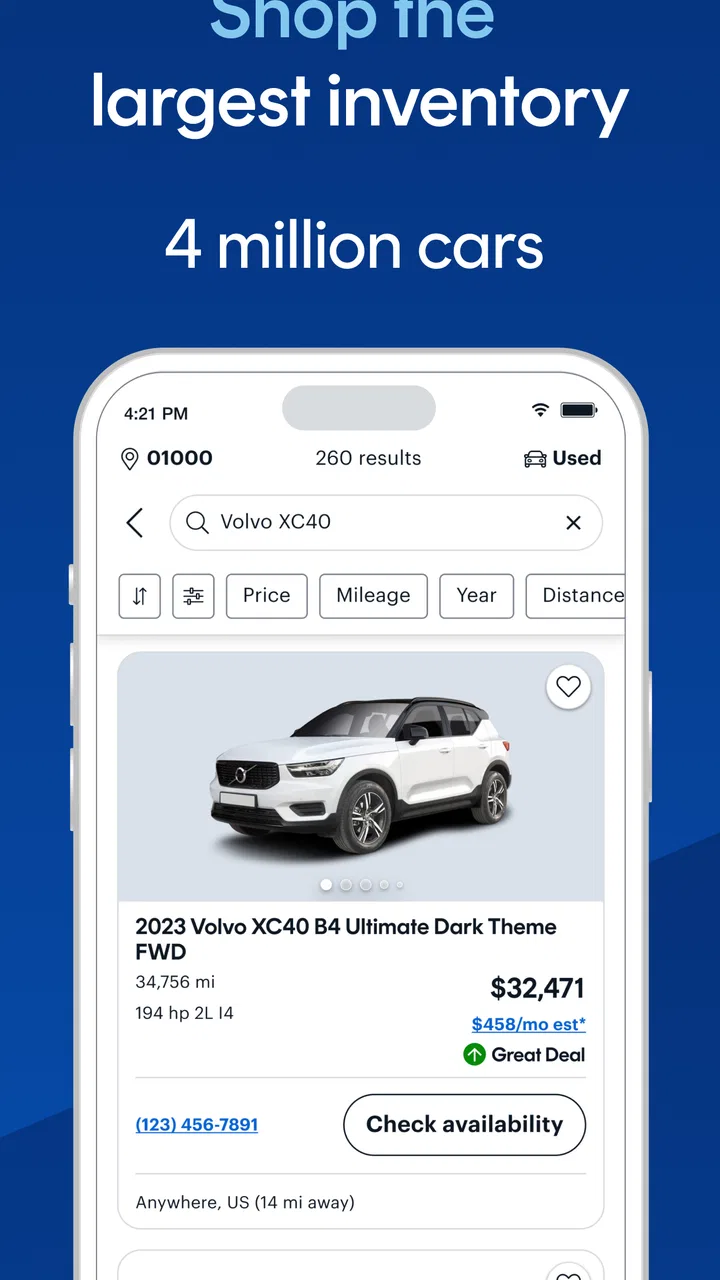
CarGurus provides a comprehensive platform for buying and selling cars. Key features include a vast inventory of new and used vehicles, the ability to compare prices, access to vehicle history, dealer reviews, and pricing insights. The app also offers a price analysis to ensure you get the best deal, making it a valuable tool for buyers and sellers alike.
02How reliable is the price analysis provided by CarGurus?
CarGurus uses a proprietary algorithm to analyze millions of listings, ensuring that users receive accurate pricing information. The app ranks deals as Great, Good, Fair, or Overpriced based on various factors like market trends and dealer history. This reliability helps users make informed decisions, saving time and potentially money in the process.
03Is the CarGurus app user-friendly for first-time car buyers?
Yes, the CarGurus app is designed with user-friendliness in mind, catering to both first-time buyers and experienced shoppers. Its intuitive interface makes searching for cars straightforward, with filters for price, make, model, and more. The app also provides educational resources and tips for first-time buyers, ensuring a smooth and informed car-buying journey.
04Can I sell my car through the CarGurus app, and how does the process work?
Selling your car on CarGurus is simple and efficient. Users can create a listing by entering vehicle details, uploading photos, and setting a price. The app provides guidance on pricing to attract buyers. Once listed, users can manage offers and communicate with potential buyers through the app, making the selling process streamlined and effective.
05What are the privacy and security measures in place for CarGurus users?
CarGurus prioritizes the privacy and security of its users by implementing robust data protection measures. The app encrypts user data and communication to safeguard personal information. Additionally, CarGurus offers secure payment options and provides guidance on safe buying and selling practices, ensuring a secure experience for all users.
Pros
- Extensive car listings with detailed descriptions.
- User-friendly interface for easy navigation.
- Advanced search filters to refine results.
- Price analysis tool for market value insights.
- Dealer reviews to help gauge credibility.
Cons
- Limited private seller options available.
- Occasional outdated listings still appear.
- Some features require account creation.
- In-app ads can be intrusive at times.
- Price alerts can be inconsistent.

CarGurus: Used & New Cars
Gallery